The work I share with AI
AI is an integral part of how I work now. Here are some of the ways I use it, and the places where I trust my own judgment instead.
I built the Lendsight front end with Claude Code
I designed the core screens for the Lendsight consumer product in Figma, along with the design system behind them. I connected that design system to Storybook so the components were live and reusable, then used Claude Code to build out the rest of the front end from there. Because it pulled the real components instead of mocked-up ones, what it generated was actual working code. I move between Claude Code and Cursor depending on the task.

I use AI to structure my research
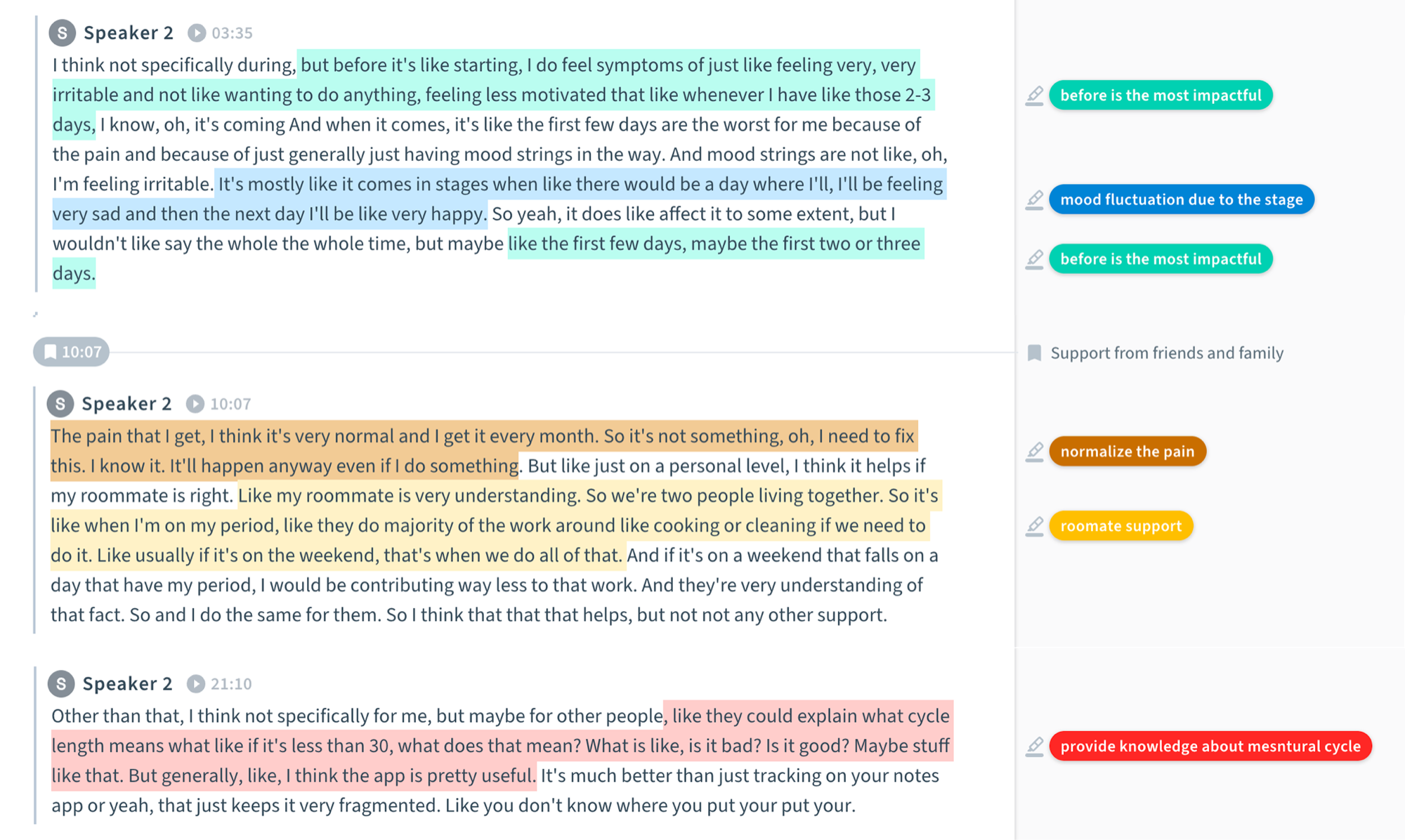
I feed my interview transcripts into AI and it surfaces patterns across what different people say. It also pulls together a first set of themes, which gives me a solid starting point. From there I go in, verify everything against the actual quotes, and take it the rest of the way.
I use AI to try multiple directions before I commit to one
I use Claude in design mode to help me rough out the information architecture and try a few different design directions before I open Figma. Comparing three or four approaches this way is fast, so when I commit to one, it's because I've weighed it against the others, not because it's the only thing I made.
I have AI assume the role of an expert to critique my work
I have AI take on the role of a specific person and give me feedback: my target user, a PM, a marketing lead, whoever's perspective I'm missing. I do this with a rough concept, a high-level idea, or a set of lo-fi wireframes. It helps me pressure-test my ideas and find the weak spots early and quickly, so by the time I bring something to a real stakeholder, it's already gone through a first pass of feedback.
I build custom skills so the process is repeatable and consistent
I build custom skills that hold my own rules for writing and naming things. Once the model has them, the output comes back consistent across everything I make and in the voice I want, instead of generic phrasing I'd have to rewrite. It makes the process repeatable and saves me time from project to project.
I build systems where agents hand work to each other
This is one example of how I do it. I run a group of agents that work through a product's main flows and audit them end to end. One walks the flows and captures each screen. One checks every screen against Nielsen's heuristics and my own checklist. One ranks what it finds by severity, and one writes it up with the screenshot, the issue, and a suggested fix. I go through the report, throw out the false alarms, and decide what's actually worth fixing. The agents do the first pass. The judgment about what matters is mine.
I use the same tools on my job search
I run my own job search with AI too. It helps me research companies, draft outreach, and keep my pipeline organized. If it makes the work better, I use it here the same way I do everywhere else.
Where I don't use AI
I'm still the director and the decider
AI is great for a head start: a first pass on research, a rough draft, a few options to react to. But it doesn't decide what any of it means. I read everything it gives me myself and make the final call. And I don't take an answer at face value just because it sounds confident. AI writes with the same certainty whether it's right or wrong, so I check it against what I actually know before I use it.
I don't add AI to a product just because I can
Putting AI in front of a user is a design choice, not a given. On Hinge Health, the obvious move was a chatbot for health questions. But when I tested it, 13 of 19 people told me they didn't want that. They weren't comfortable talking to a bot about a medical decision, so it didn't go in. What we built came down to whether it actually helped the person, not whether we could add it.